
The Connection Between Gambling and Substance Use
Dual Diagnosis Treatment Explained
Addiction rarely exists in isolation. For many individuals, struggles with gambling and substance use are deeply intertwined, creating a complex cycle that can be difficult to break. This co-occurrence, often referred to as a dual diagnosis, requires specialised care that addresses both conditions simultaneously.
Understanding the connection between gambling and substance use is essential for effective treatment and long-term recovery. At Windsor House Private, we recognise that treating one issue without addressing the other can limit progress and increase the risk of relapse.
This article explores how these substance and gambling addiction are linked, why they often occur together, and how dual diagnosis treatment offers a comprehensive path to recovery.
What Is Dual Diagnosis?
Dual diagnosis refers to the presence of two or more co-occurring disorders, typically involving:
- A substance use disorder (e.g. alcohol or drug dependency)
- A behavioural addiction or mental health condition (e.g. gambling disorder, anxiety, depression)
In this context,dual diagnosis specifically involves problem gambling alongside substance misuse.
Rather than treating these issues separately, dual diagnosis care focuses on integrated treatment, ensuring both conditions are addressed at the same time.
The Link Between Gambling and Substance Use
Shared Brain Mechanisms
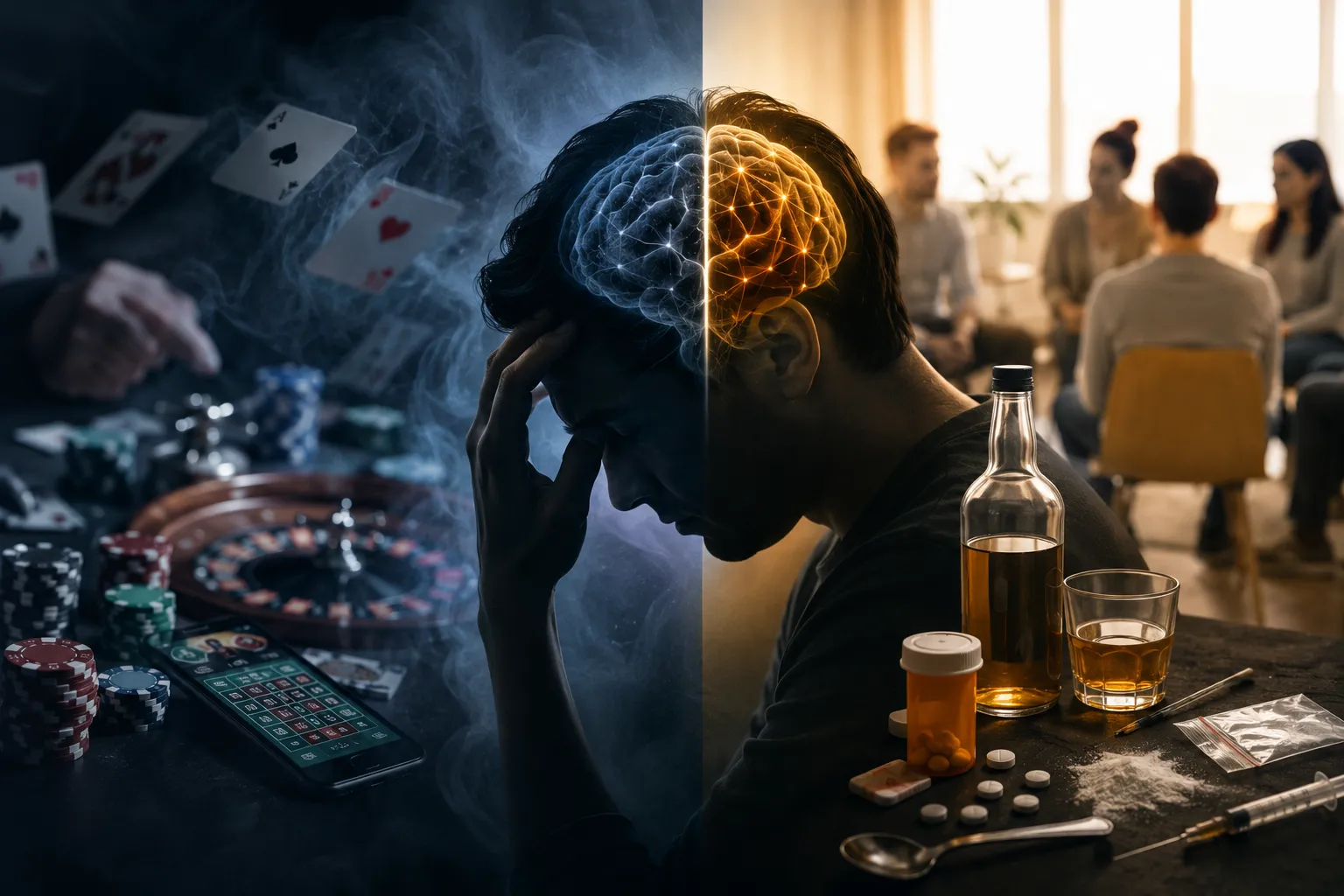
Both gambling and substance use activate the brain’s reward system, particularly the release of dopamine. This creates feelings of pleasure, excitement, and reinforcement.
Over time:
- The brain begins to crave these rewards
- Tolerance builds, requiring more intense behaviour or substance use
- Decision-making and impulse control weaken
This neurological overlap explains why individuals who struggle with one addiction are more likely to develop another.
Increased Risk-Taking Behaviour
Gambling and substance use both lower inhibitions and increase impulsivity. When combined:
- Alcohol or drugs can impair judgment during gambling
- Losses may lead to further substance use as a coping mechanism
- Wins may reinforce both behaviours simultaneously
This creates a self-perpetuating cycle of risk-taking and emotional highs and lows.
Emotional and Psychological Factors
Many individuals use gambling or substances to cope with underlying issues such as:
- Stress or trauma
- Anxiety or depression
- Loneliness or social isolation
- Low self-esteem
When both behaviours are present, they often serve similar emotional functions, making them harder to separate without professional support.
Signs of a Co-Occurring Disorder
Recognising the signs of dual diagnosis is a crucial step toward getting help. Common indicators include:
- Using alcohol or drugs while gambling
- Gambling more frequently when under the influence
- Chasing losses while impaired
- Financial problems combined with substance dependency
- Mood swings, irritability, or secrecy
- Failed attempts to stop either behaviour
If these patterns are present, it is likely that both conditions are influencing each other and require integrated care.
Why Treating One Issue Isn’t Enough
A common mistake in recovery is focusing on only one addiction. For example:
- Treating substance use without addressing gambling triggers
- Addressing gambling behaviour without managing substance cravings
This approach often leads to partial recovery and increased relapse risk.
The Cycle of Substitution
Without dual diagnosis treatment, individuals may:
- Replace gambling with substance use
- Replace substance use with gambling
This“substitution effect” keeps the addictive cycle alive, even if one behaviour temporarily stops.
What Is Dual Diagnosis Treatment?
Dual diagnosis treatment is a comprehensive, integrated approach that addresses both gambling and substance use disorders simultaneously.
At Windsor House Private, this approach is tailored to each individual and typically includes:
1. Comprehensive Assessment
A detailed evaluation helps identify:
- The severity of each condition
- Underlying mental health factors
- Personal triggers and risk factors
This forms the foundation of a personalised treatment plan.
2. Detox and Stabilisation (If Required)
For individuals with substance dependency, medically supervised detox may be necessary to:
- Safely manage withdrawal symptoms
- Stabilise physical health
- Prepare for ongoing therapy
3. Evidence-Based Therapies
Therapeutic interventions play a central role in dual diagnosis care. These may include:
- Cognitive Behavioural Therapy (CBT) to address harmful thought patterns
- Motivational Interviewing (MI) to build commitment to change
- Behavioural therapies targeting gambling triggers and habits
These approaches help individuals understand the connection between their behaviours and develop healthier coping strategies.
4. Trauma-Informed Care
Many co-occurring disorders are rooted in unresolved trauma. Trauma-informed care ensures that treatment:
- Is safe and supportive
- Avoids re-traumatisation
- Addresses underlying emotional pain
5. Relapse Prevention Planning
Recovery involves preparing for real-world challenges. This includes:
- Identifying high-risk situations
- Developing coping mechanisms
- Building a structured support system
6. Ongoing Support and Aftercare
Long-term recovery requires continued support beyond initial treatment. Aftercare may include:
- Counselling or therapy sessions
- Support groups
- Lifestyle and wellness planning
At Windsor House Private, ongoing care is designed to maintain progress and promote lasting change.
Benefits of an Integrated Treatment Approach
Dual diagnosis treatment offers several key advantages:
- Improved outcomes by addressing all contributing factors
- Reduced relapse risk through comprehensive care
- Better mental health stability
- Stronger coping skills
- Enhanced quality of life
By treating the whole person — not just the symptoms — individuals are more likely to achieve sustainable recovery.
Challenges in Dual Diagnosis Recovery
While effective,dual diagnosis treatment can present challenges:
· Complexity of Treatment
· Managing multiple conditions requires a coordinated and specialised approach.
· Emotional Intensity
· Addressing both addictions and underlying issues can feel overwhelming at times.
· Stigma and Misunderstanding
Behavioural addictions like gambling are sometimes minimised, which can delay seeking help.
Despite these challenges, with the right support and environment, recovery is entirely achievable.
How to Support Someone with Dual Diagnosis
If a loved one is struggling with both gambling and substance use, your support can make a significant difference.
Practical Ways to Help:
- Encourage professional treatment rather than self-management
- Avoid enabling behaviours (e.g. providing money)
- Be patient and non-judgmental
- Learn about dual diagnosis to better understand their experience
- Support healthy routines and accountability
Remember,recovery is a process — not a quick fix.
When to Seek Professional Help
It’s time to seek help if:
- Gambling and substance use are both ongoing
- Attempts to quit have been unsuccessful
- There are financial, legal, or relationship consequences
- Mental health symptoms are worsening
Early intervention can significantly improve outcomes and prevent further harm.
The connection between gambling and substance use is complex, but it is not insurmountable.These co-occurring disorders often share the same underlying causes,reinforcing each other in ways that make recovery challenging without the right approach.
Dual diagnosis treatment provides a structured, integrated solution — addressing both conditions simultaneously and supporting long-term healing.
At Windsor House Private, we understand that recovery is about more than stopping harmful behaviours. It’s about rebuilding lives, restoring balance, and creating a future grounded in stability and wellbeing.
If you or someone you care about is facing both gambling and substance use challenges, know this:
Effective help is available. Recovery is possible. And the right support can make all the difference.


Book a private consultation and talk with one of our well-trained and experienced team members. We help drug (including ice), opioids, cocaine, alcohol, and gambling addicts with our private rehab.
Windsor House Private acknowledges the Traditional Owners of the land on which we meet and work, and we pay our respects to Elders past, present and future. We embrace diversity, welcoming individuals of all cultures, languages, abilities, sexual orientations, gender identities, gender expressions, and intersex status. Our commitment extends to inclusive programs, prioritising the safety and wellbeing of all people without discrimination.